Goals
Operating a local Gitea server (GIT) is actually quite simple and quite sufficient for local or private use.
Once this part is completed, a full Gitea server can be accessed on the local network.
NEW: For the very impatient I have a console only section. There are only commands, no explanations.
This simplest expansion stage of the first part is NOT suitable for public operation!
Access is not (yet) via an encrypted connection. Transport encryption is deliberately not done locally, because GIT reacts very allergic to self-signed or self-made certificates. This works in a pinch, but is cumbersome.
Last updated:
- 18.01.2026: Removing the external directories. This is explained here, but it is only for advanced administrators.
- 03.03.2024: Minor adjustments
- 05.02.2024: Console only part added
- 05.01.2024:
configdirectory migrated todata, only one external directory required.gitea generate secretas replacement foropenssl rand.backupdirectory added. Minor adjustments - 13.08.2023: Save data and configuration optional outside the jail added
- 29.07.2023: Update for FreeBSD 13.2 and finalisation
- 20.05.2023: Initial document
Requirements
- A FreeBSD server is set up and prepared
- Bastille is installed and ready for use
- IP address of the jail is known and preferably reserved in DHCP
- Hostname of the jail is known (e.g. git.domain.local) and accessible via internal DNS
In general, such services should be set up in a separate environment. This makes not only the security but also the maintenance much easier. Jails can be backed up relatively easily and only the packages that are absolutely necessary are installed.
Diagram
The setup, including all optional possibilities, looks like this:
                   ┌────────────────┐
                   │  FreeBSD       │
                   │ ┌────────────┐ │
                   │ │ jails/git  │ │
LAN: 0.0.0.0:3000 ─│─│─► gitea    │ │
                   │ └────────────┘ │
                   └────────────────┘
Create jail
A separate jail is required if further web applications are to be built on Nginx/PHP.
Here we use web as the jail name.
Set up jail
Either use bastile console git to start a console in the created jail, or log in via SSH (if activated) with ssh USERNAME@IP or ssh USERNAME@HOSTNAME to then gain root rights with su.
Customise package source
Package sources should be customised, see separate article.
Install packages & activate services
Now update the package source with pkg update and install the required packages: pkg install gitea.
Enable services so that they start automatically when the jail is started: service gitea enable.
Gitea
Create configuration
Compared to the supplied standard configuration, this one has a few changes:
- Indexer for full text search is enabled (
REPO_INDEXER_ENABLED = true) - Gravatar is disabled (to prevent unwanted connections to third parties) (
DISABLE_GRAVATAR = true) - Email notifications etc. remain disabled (
ENABLED = false) - Version and branding in the footer are hidden (
SHOW_FOOTER_BRANDING = false) - Access via SSH is disabled and only HTTP/HTTPS remain enabled (
DISABLE_SSH = true) - Access is not only possible via localhost (
HTTP_ADDR = 0.0.0.0)
cat > /usr/local/etc/gitea/conf/app.ini << 'EOF'
APP_NAME = Gitea
RUN_USER = git
RUN_MODE = prod

[database]
DB_TYPE  = sqlite3
HOST     = 127.0.0.1:3306
NAME     = gitea
PASSWD   =
PATH     = /var/db/gitea/gitea.db
USER     = root
SSL_MODE = disable

[indexer]
ISSUE_INDEXER_PATH = /var/db/gitea/indexers/issues.bleve
REPO_INDEXER_ENABLED = true

[log]
ROOT_PATH = /var/log/gitea
MODE      = file
LEVEL     = Info

[mailer]
ENABLED = false

[oauth2]
JWT_SECRET = GITEAJWTSECRET

[picture]
AVATAR_UPLOAD_PATH      = /var/db/gitea/data/avatars
DISABLE_GRAVATAR        = true
ENABLE_FEDERATED_AVATAR = false

[repository]
ROOT = /var/db/gitea/gitea-repositories
SCRIPT_TYPE = sh
DISABLED_REPO_UNITS = repo.packages,repo.releases
DEFAULT_BRANCH = main

[repository.upload]
TEMP_PATH = /var/db/gitea/data/tmp/uploads

[security]
INSTALL_LOCK = true
INTERNAL_TOKEN = GITEAINTERNALTOKEN
SECRET_KEY   = GITEASECRETKEY

[session]
PROVIDER = file
PROVIDER_CONFIG = /var/db/gitea/data/sessions

[server]
DOMAIN       = GITEAHOSTNAME
HTTP_ADDR    = 0.0.0.0
HTTP_PORT    = 3000
ROOT_URL     = http://GITEAHOSTNAME:3000/
DISABLE_SSH  = false
SSH_DOMAIN   = %(DOMAIN)s
SSH_PORT     = 22
DISABLE_SSH  = true
OFFLINE_MODE = false
APP_DATA_PATH = /var/db/gitea/data

[service]
REGISTER_EMAIL_CONFIRM = false
ENABLE_NOTIFY_MAIL     = false
DISABLE_REGISTRATION   = false
ENABLE_CAPTCHA         = false
REQUIRE_SIGNIN_VIEW    = true

[other]
SHOW_FOOTER_BRANDING = false
SHOW_FOOTER_VERSION = false
SHOW_FOOTER_TEMPLATE_LOAD_TIME = false
'EOF'
Subsequently still filled:
GITEAHOSTNAME,GITEAINTERNALTOKEN,GITEAJWTSECRETundGITEASECRETKEY
sed -i '' 's/GITEAHOSTNAME/'`hostname -f`'/' /usr/local/etc/gitea/conf/app.ini
sed -i '' 's/GITEAINTERNALTOKEN/'`gitea generate secret INTERNAL_TOKEN`'/' /usr/local/etc/gitea/conf/app.ini
sed -i '' 's/GITEAJWTSECRET/'`gitea generate secret JWT_SECRET`'/' /usr/local/etc/gitea/conf/app.ini
sed -i '' 's/GITEASECRETKEY/'`gitea generate secret SECRET_KEY`'/' /usr/local/etc/gitea/conf/app.ini
Finally, adjust the authorisation of the configuration file with chown git:git /var/db/gitea/app.ini.
Start services
We have now reached the end of the preparations and Gitea is started with service gitea start.
Registration
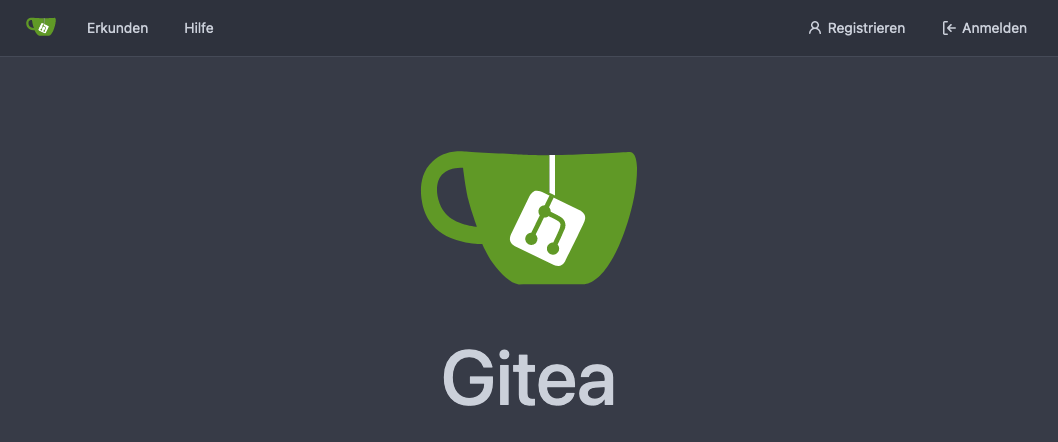
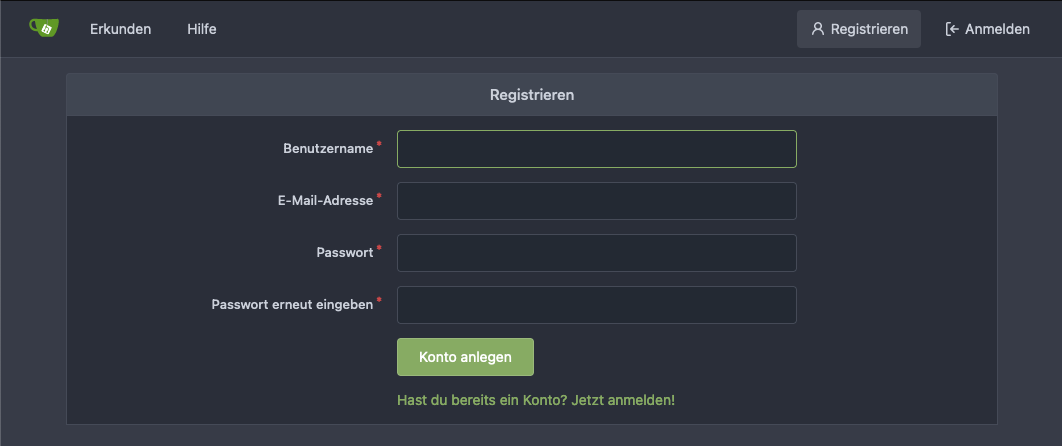
Now Gitea is called up for the first time and the first user is registered.
To do this, call up the IP or host name of the Gitea jail with your favourite browser:
http://IP:3000 or http://HOSTNAME:3000.
This first user is then automatically also the user with administration rights!
The user must NOT be called admin!
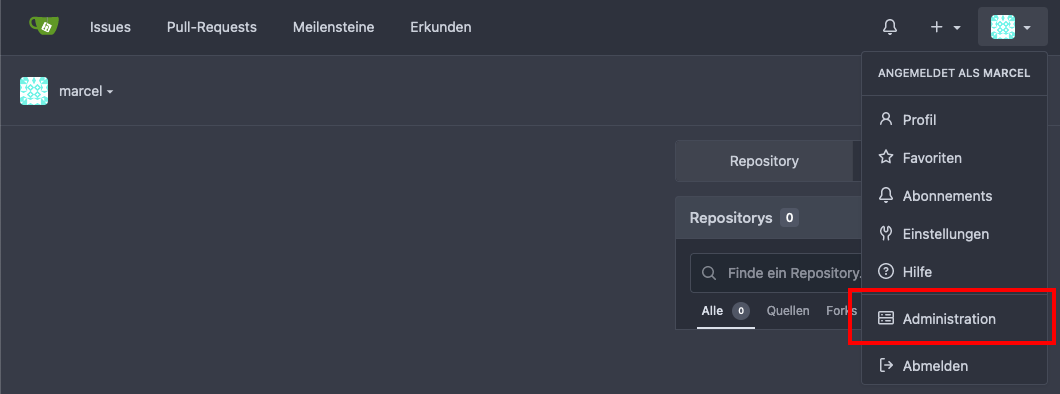
After the first admin user has been created, consideration can be given to disabling the stand-alone registration and giving the admin the task of creating new users in the system. To do this, it is sufficient to set the DISABLE_REGISTRATION entry in /var/db/gitea/conf/app.ini from false to true and restart the Gitea service with service gitea restart.
Console
Voilá